American Chestnut Cooperators Foundation

Genus Castanea
Click Pics to Enlarge
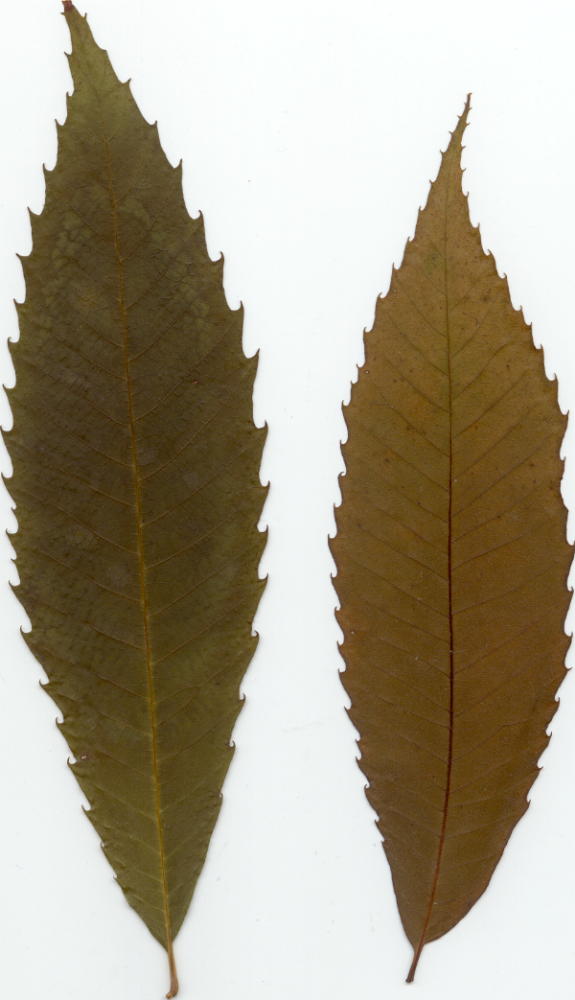
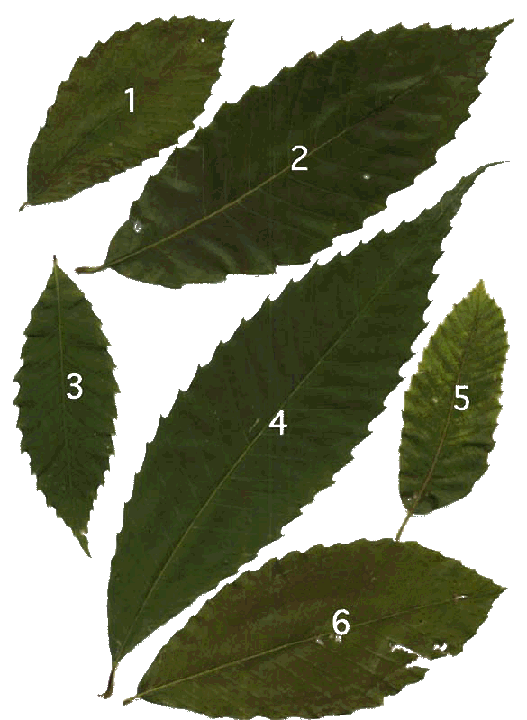
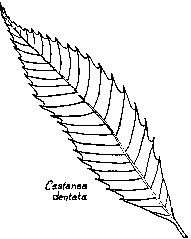
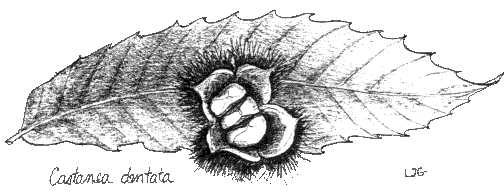
American chestnut (Castanea dentata)
Tallest of the chestnuts with nuts smaller and sweeter than other chestnuts, but not as sweet as the Allegheny
chinkapin, the American chestnut was highly valued as a timber tree and a dependable source of nuts for
wildlife. It is identified by the leaves which are smooth and waxy on the underside, with deeply sculpted
intervals along the edges, accentuating the teeth (therefore the designation, dentata). The base of the leaf tapers
sharply, and its point is an elongated sharp taper (lanceolate). American chestnut burs usually contain three
nuts each. Hybrids of other chestnut species with American tend to have leaves that resemble the American
mother, and can only be distinguished by microscopic examination of leaf hairs by an expert.
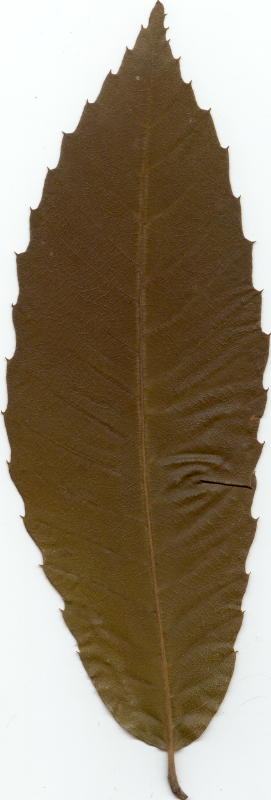
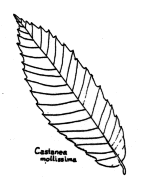
Chinese chestnut (Castanea mollissima)
More resistant than any other chestnut species to the blight fungus, its nuts are sweeter and finer textured
than those of the Japanese chestnut, and they are usually larger than those of the American chestnut. The
chestnuts most commonly found for sale in country stores are Chinese. Most Chinese chestnuts do not
have good timber form; their shape resembles an apple tree. Their leaves are quite variable. Compared to
American leaves, those of Chinese chestnut are more oval shaped (oval-lanceolate), with the tips abruptly
tapered and the base more rounded; the intervals along the edges between the teeth are not remarkable,
and the underside of leaves are covered with downy hairs, soft to the touch (therefore the designation,
mollissima). The Chinese chestnut is the hardiest of Asian chestnuts, with a natural range extending from south
China to north of Beijing. In the southern part of its range, it is found at higher elevations; in the northern range,
it thrives only on the better sites, particularly lower mountain slopes where it has some protection, good air
drainage, good soil and the advantage of underground water from the slopes above. There are many different
varieties of Chinese chestnuts, and their hardiness varies. Generally they grow vigorously on good sites in the
United States and are seldom injured by blight. However, owing to a poor site, drought, or winter injury, they
are sometimes severely attacked and killed by blight.
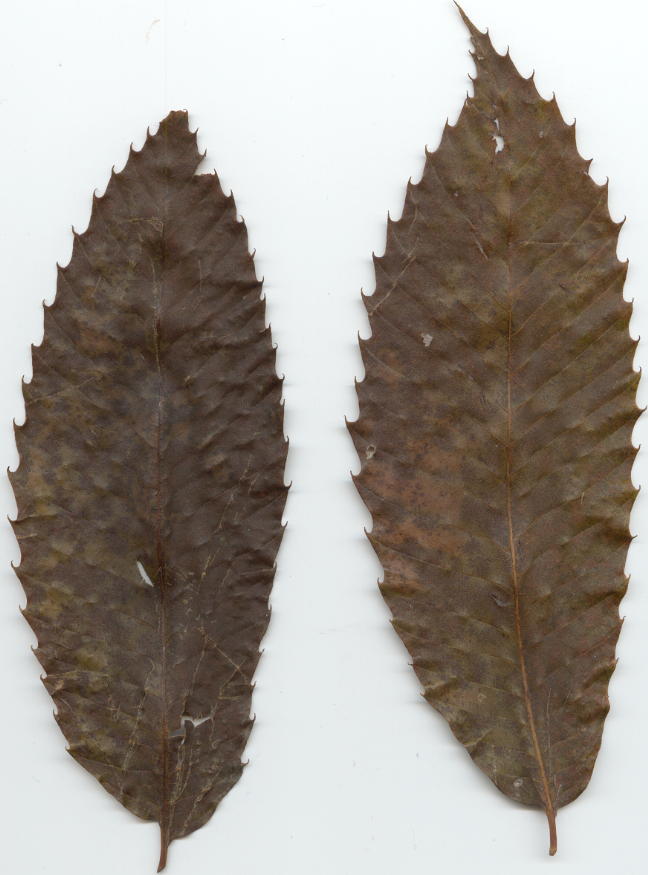
European chestnut (Castanea sativa)
Nearly as tall as the American, the European chestnut has a similar growth habit, tall and straight in the forest,
spreading in open settings. It is slightly less blight-susceptible than American. It's nuts are about the same size
as Chinese, but sweeter. It's leaves are quite variable, at a glance, easily confused with American hybrids.
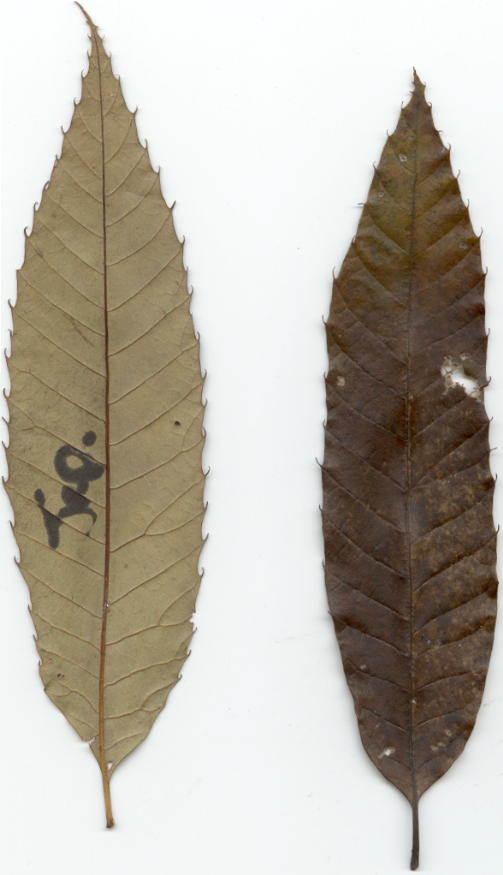
Japanese chestnut (Castanea crenata)
The Japanese chestnut grows wild in the mountains and hills of Japan. Not as tall as the American, its nuts range
in size from that of the American to that of the European chestnut. Usually the nuts are large, coarse in texture
and poor in flavor. The leaves are quite variable. Compared to the American, the Japanese chestnut leaf has a
similar long sharp tapering tip, but a blunt base; its teeth are very small and poorly defined.
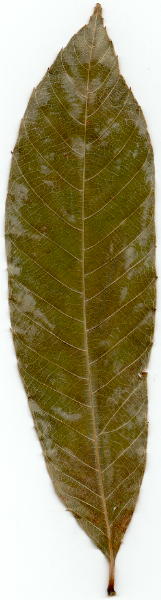
Henry chinkapin (Castanea henryi)
Native in middle China from the coast to the far west, the Henry chinkapin grows 75 to 90 feet tall with a straight,
symmetrical trunk. In the United States, the Henry chinkapin seems to be more susceptible than the other Asiatic
species to freezing temperatures and the blight fungus.
Ozark chinkapin (Castanea ozarkensis)
Native to the Ozarks, this tree grows up to 60 feet tall. It is susceptible to blight. Leaves are very similar to
American chestnut, the same shape and deeply toothed. The distinguishing sparse hairs on the underside of
leaves may not be visible to the naked eye. The bur is slightly larger than Allegheny chinkapin and holds a single
small plump nut.
Seguin chestnut (Castanea seguinii)
Usually no taller than 30 feet, the Seguin chestnut grows in the warm climate of southern China. Nuts of the Seguin
are very small. In the United States this species grows well only in the Southeast.
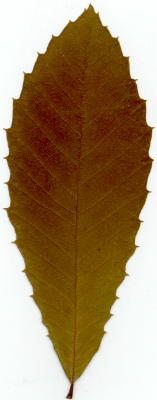
Allegheny chinkapin (Castanea pumila)
This small tree or spreading shrub grows in dry woods in the east from New Jersey and Pennsylvania south to
Florida and Texas. It is susceptible to blight. The sharply tapered base of the leaves resemble American chestnut;
the leaf tip is pointed but not elongated, and the broader part of the leaf is near the tip (obovate-lanceolate); the
sculpting along the edges, between the teeth, and the downy undersides of leaves resemble Chinese chestnut.
One inch burs each hold one tiny, very sweet, plump
nut.

seen within the natural range of American chestnut. For the correct answers, return to the Webrary page.